
Cyberattack breaches CIA system, affecting unclassified data
A cyberattack breached a CIA system used to analyze information, affecting unclassified data, as concerns grow over cybersecurity in the United States.

WASHINGTON — One of the electronic systems of the U.S. Central Intelligence Agency (CIA) has been breached in a cyberattack, the latest security incident targeting U.S. government institutions, amid growing concern over the safety of digital networks and systems used to gather intelligence.
The Associated Press, citing a source familiar with the incident, reported that the breach targeted a system that handles information not classified as secret and is used to collect and analyze data from publicly available sources.
The source, who asked not to be identified, said the attack did not affect classified intelligence and that the security problem has been resolved.
However, it is still unclear what data the attackers were able to access, and the party responsible for the breach has not been identified.
Breach of a system the CIA uses to gather intelligence
According to published information, the attack targeted a system specializing in what is known as open-source intelligence (OSINT).
This technique relies on collecting and analyzing information that is publicly or commercially available, including websites, databases and commercial satellite imagery.
Intelligence agencies use this information to monitor political, military and security developments and to analyze activities that may be linked to potential threats.
Although the data used in this type of system is not necessarily classified, collecting and analyzing it can produce information of considerable intelligence value.
It can also be combined with data that security agencies obtain by other means to build a more comprehensive picture of the activities of individuals, institutions and other groups.
Was classified intelligence leaked?
The source familiar with the incident said the breach did not involve information classified as secret.
Reuters also quoted the Office of the U.S. Director of National Intelligence as saying the incident did not disrupt critical capabilities or classified systems.
That statement offers some clarity on the scope of the incident, but it does not specify how much unclassified data may have been compromised.
U.S. authorities have not disclosed how the attack was carried out or what security vulnerability the attackers exploited to reach the system.
They also have not said whether a foreign party or a hacking group was behind the operation.
These details remain unresolved given the limited official information published so far.
Reports that the Office of the Director of National Intelligence was affected
Information about the breach was not limited to the CIA. The New York Times reported that data linked to the Office of the Director of National Intelligence (ODNI) was affected.
Reuters said the incident involved a network used to search for intelligence in publicly available, unclassified material.
Reports also indicated that information belonging to other U.S. government institutions may have been affected.
However, no precise details have been published on the nature of that information, the number of agencies affected, or the amount of data the attackers may have obtained.
This lack of clarity adds to the importance of technical investigations aimed at determining the scope of the breach and how it happened.
A series of cyber incidents across U.S. institutions
The disclosure of the attack follows a series of outages and cyber incidents in the United States this month.
An internal network used by the U.S. National Security Agency (NSA) to exchange classified information was temporarily knocked offline last week.
The Federal Bureau of Investigation (FBI) is also investigating a possible breach of a national law enforcement database that it manages.
Other reports pointed to security incidents affecting government institutions, including the U.S. Department of Agriculture, as well as incidents linked to the Pentagon and the Department of Homeland Security.
Despite the close timing of these developments, authorities have not provided evidence linking them to a single cyberattack or a common responsible party.
Outages affecting aviation, banks and technology companies
The government incidents coincided with technical disruptions that affected a number of vital sectors in the United States.
The aviation sector saw a widespread grounding of flights after communication problems between air traffic controllers and pilots.
Systems belonging to major companies, including Apple, Microsoft and JPMorgan Chase, also suffered outages during the same month.
These incidents again highlighted how much essential services depend on digital infrastructure.
U.S. officials stressed the need to distinguish between technical failures and cyberattacks, and not to treat all simultaneous incidents as evidence of an organized operation.
Trump administration denies a coordinated cyberattack
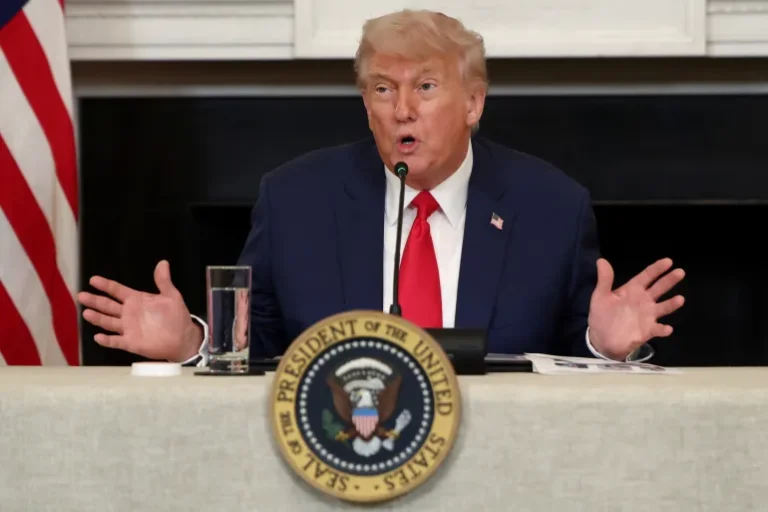
The administration of U.S. President Donald Trump said that, based on the information available to it, the recent series of technical failures does not amount to a coordinated cyberattack targeting the United States.
Director of National Intelligence Jay Clayton appeared in media interviews over the weekend to reassure Americans about the safety of critical systems.
He explained that many of the disruptions are linked to system updates and the patching of security vulnerabilities, amid the rapid evolution of hacking methods.
He noted that artificial intelligence tools are giving attackers more sophisticated capabilities, prompting institutions to step up updates to their protective software.
These statements relate to the administration's assessment of the series of outages and do not mean that authorities have denied the breach of the unclassified intelligence system.
Growing concerns over government information security
The latest attack raises renewed questions about how well the systems used by intelligence institutions are protected, even when they do not contain information classified as secret.
Publicly available data can be highly valuable when collected and analyzed within specialized databases.
A breach of systems used for analysis may also reveal the nature of certain activities or research interests of the institutions concerned, depending on what information the attacker can access.
With the security problem said to have been addressed and classified systems unaffected, key questions remain unanswered, chiefly the identity of those behind the attack, how the breach occurred and how much data was affected.
The incident underscores the growing challenges facing intelligence agencies and government institutions in protecting their digital systems, amid rising cyber threats and increasingly complex attack tools.
More World



Latest from Hala Canada
- Canada responds to Pentagon criticism: we are not subordinate to the U.S. and do not take its orders
- Prince Edward Island invites 116 foreign workers to apply for provincial nomination
- Canada gives provinces 139 days to nominate tens of thousands of workers for permanent residence
- Newfoundland and Labrador issues 98 new immigration invitations in Nov. 19 round
- Trump administration weighs targeting Iranian leaders to end war, with divisions in Washington over risks
- Report: 82% of Canadian grandparents give financial help to children and grandchildren