
UN faces possible leadership vacuum as Guterres's term nears its end
The Security Council has held eight secret ballots without agreeing on a successor to Secretary-General António Guterres, whose term ends Dec. 31, amid divisions among the major powers.
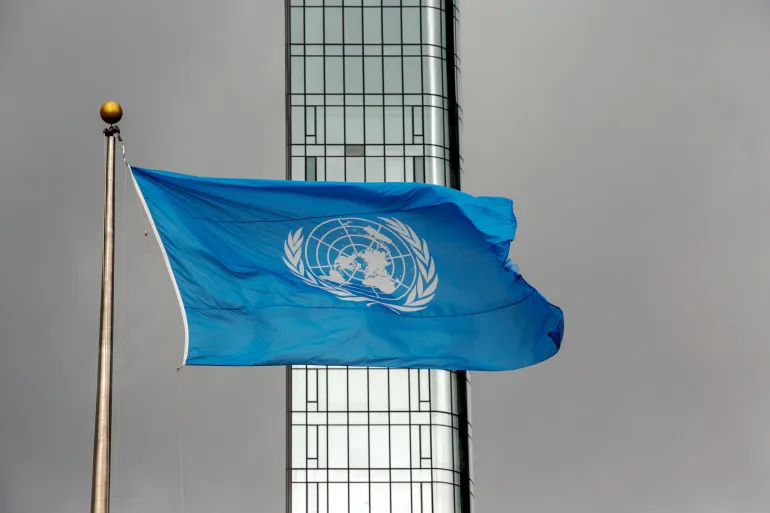
NEW YORK — The United Nations faces the prospect of an unprecedented leadership crisis as the term of Secretary-General António Guterres ends on Dec. 31, with no agreement among the major powers on who will succeed him.
Diplomatic reports indicate that the UN Security Council has failed, over eight rounds of secret balloting, to reach a consensus on the next candidate.
The continuing disagreement has led officials and experts to discuss emergency arrangements to keep the organization working after Guterres leaves office.
Eight rounds without agreement
The selection of the secretary-general takes place through consultations and ballots within the Security Council, which has 15 members.
Members take part in assessing the candidates by voting to encourage, to discourage, or to abstain from expressing an opinion.
In the end, however, a candidate needs the support of at least nine members, with no objection from any of the five permanent members.
The United States, Russia, China, France and the United Kingdom hold veto power, which gives them a decisive influence over the outcome.
Despite continuing consultations, these powers have not been able to agree on a candidate who can overcome the political obstacles.
Why the delay is raising unusual concern
Guterres's second term ends at the close of this year, after ten years at the head of the organization.
The new secretary-general is normally chosen well ahead of taking office so that he or she can form a team and prepare priorities.
But the approaching deadline without an agreement threatens to disrupt the administrative and political transition.
Shamala Kandiah Thompson, executive director of Security Council Report, warned that the current delay leaves very little time to prepare for the next phase.
She noted that the selection process began early and was supposed to provide a more orderly transition period.
What happens if the term ends without a successor?
The legal problem is that the UN Charter contains no clear provision on how the organization should be run if the post of secretary-general is vacant.
In the organization's history, a secretary-general's term has never ended without a successor being appointed.
A memo issued in September by the 1 for 8 Billion campaign addressed the possibility of appointing an acting official or extending Guterres's term for a temporary period.
Both options, however, raise legal and political difficulties and would require agreement among member states.
Russian official Kirill Logvinov acknowledged that there is no clear picture of what could happen after the end of December, noting that the options are still under discussion.
Would the UN stop working?
The absence of a new secretary-general does not automatically mean that all UN institutions stop functioning.
The Security Council and the General Assembly can continue to meet and carry out their work under the powers granted to them.
However, the administration of the Secretariat could face difficulties in making strategic decisions, senior appointments and preparing budgets.
Former UN official Daniel Safran Hon compared the situation to a large ship that has lost its captain, where other officials can continue some tasks without holding full command authority.
This scenario raises concerns about the organization's ability to respond quickly to international crises.
Divisions among major powers block consensus
Analysts say political divisions among the permanent members make it harder to reach a consensus candidate.
The organization already faces challenges linked to international wars, reduced U.S. funding and a dispute over reform of the Security Council.
Richard Gowan of the International Crisis Group believes the complexity of the selection mechanism reflects the need for the secretary-general to have a minimum level of acceptance from the major powers.
But this balance can become an obstacle when disagreements among them escalate.
Can the crisis be resolved before the end of December?
The Security Council still has time to complete the balloting and arrive at a recommendation to submit to the General Assembly.
The General Assembly has 193 member states and makes the formal appointment once the Council issues its recommendation.
It has never rejected a candidate recommended by the Security Council.
The selection of Guterres in 2016 took six rounds of balloting, while the current process has gone beyond that number without a result.
The possibility of an agreement remains, but the lack of a firm timetable increases pressure on the parties involved.
Resolving the dispute will be essential to ensure an orderly transfer of power and to preserve continuity of political and administrative leadership within the United Nations.
More World



Latest from Hala Canada
- Canada gives provinces 139 days to nominate tens of thousands of workers for permanent residence
- Newfoundland and Labrador issues 98 new immigration invitations in Nov. 19 round
- Trump administration weighs targeting Iranian leaders to end war, with divisions in Washington over risks
- Report: 82% of Canadian grandparents give financial help to children and grandchildren
- Former London, Ont., councillor Mariam Hamou sentenced to probation in case involving mayor
- Canada to pay $5,000 bonuses to eligible trades workers: eligibility and how to apply