
Why Canadians wear a red poppy on November 11
The red poppy worn for Remembrance Day on November 11 has a history stretching back more than a century, with guidelines for wearing it and donations that support veterans.
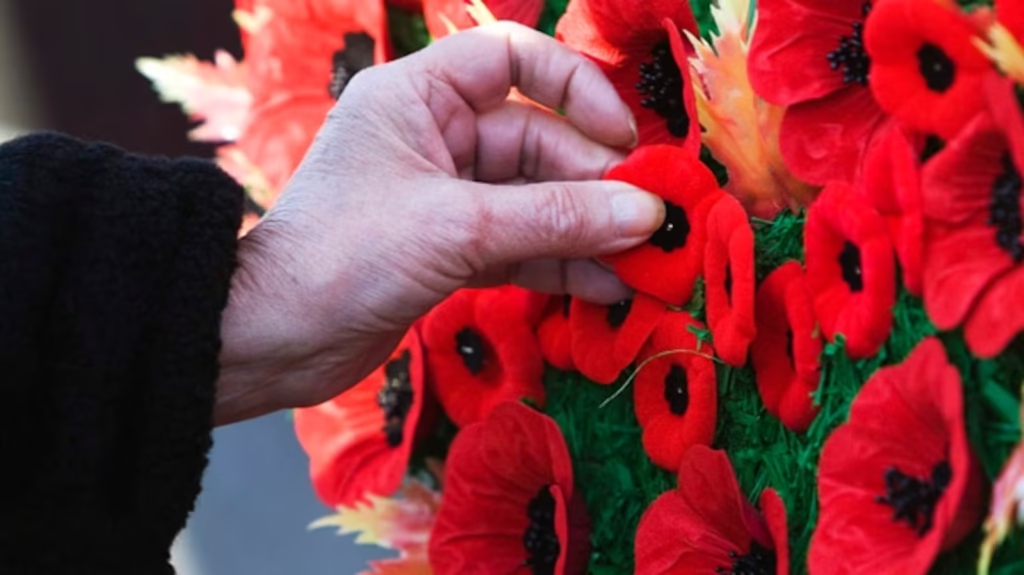
OTTAWA — Millions of Canadians wear a red poppy on their clothing each November to honour soldiers who lost their lives in wars and military conflicts, in a national tradition that dates back more than a century.
The small flower appears on coats, jackets and formal wear, especially at events leading up to Remembrance Day on November 11, when official ceremonies are held to honour military members and veterans.
Behind this simple symbol is a historical story that begins on European battlefields, before the poppy became one of the most prominent symbols of loyalty and sacrifice in Canadian society.
Why did Canada choose the red poppy?
The poppy's link to war goes back to the 19th century, when observers noticed it spreading across land that had seen battles during the Napoleonic Wars.
The scene was repeated during the First World War, particularly in parts of France and Belgium, where shelling and destruction changed the nature of the soil and helped red poppies grow in large numbers.
That sight inspired Canadian physician and officer John McCrae to write his well-known poem "In Flanders Fields" in 1915, after he lost a comrade in the war.
The poem later became a symbol of remembrance for soldiers killed in battle and helped spread the poppy as an expression of respect and appreciation for their sacrifice.
How did the poppy become a national symbol in Canada?
After the First World War, American Moina Michael was moved by McCrae's poem and decided to wear a poppy in memory of the fallen soldiers.
Frenchwoman Anna Guérin then adopted the idea and began distributing handmade flowers to raise funds for people affected by the war, especially orphaned children.
In 1921, the Great War Veterans' Association of Canada officially adopted the poppy as a symbol of remembrance, before it became a core part of the Royal Canadian Legion's activities.
Since then, wearing it has become an annual tradition in which millions of people across the country take part.
When and where should the poppy be worn?
The Royal Canadian Legion recommends placing the poppy on the left side of clothing, close to the heart, as an expression of respect for those who gave their lives.
It also advises against using decorative pins that hide the shape of the poppy or distort its appearance, while allowing approved fasteners.
The 2026 poppy campaign runs from October 24 to November 11. The poppy can also be worn at other commemorative events and at veterans' funerals.
Some participants choose to remove it after the Remembrance Day ceremonies and place it at memorials, while others keep it on until the end of the day.
The Legion stresses that wearing the poppy is a personal expression of remembrance and not an obligation placed on everyone.
Where do poppy donations go?
The tradition is not only a way to mark historical remembrance. It is also a way to raise money to help veterans and their families.
The Royal Canadian Legion directs donations to support veterans in need, including help with food, clothing, heating and medication.
The funds are also used to support medical services and long-term care, some housing programs, and the upkeep of memorials.
Poppies are distributed free of charge, and a financial contribution remains optional. Donations can be made through Legion branches or collection boxes in stores.
The organization says the proceeds of its campaigns are used to help veterans and their family members under the rules of the approved fund.
A tradition that has lasted more than a century
105 years after the poppy was officially adopted in Canada, it remains a national symbol present at Remembrance Day ceremonies.
Wearing it sends a message of appreciation to the generations who took part in wars and serves as a reminder of the human sacrifices left by military conflicts.
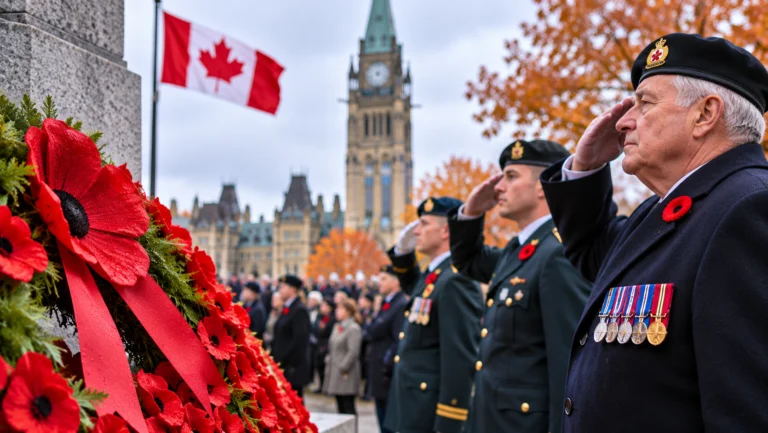
Every November 11, Canadians recall these memories by observing a moment of silence and laying wreaths, while the red poppy remains the most prominent symbol associated with the occasion.
More Community



Latest from Hala Canada
- Cadbury chocolates recalled across Canada over possible undeclared pistachios
- Montreal's 2027 draft budget proposes average 9.8% residential property tax increase
- Nvidia reinstates Jensen Huang as CEO after Trump intervenes, surprising tech markets
- Snow squall watch for Barrie area in Ontario, with up to 15 cm of snow and near-zero visibility
- Jensen Huang reinstated as Nvidia CEO; shares up about 30% before market open
- Canada and Qatar to hold first strategic dialogue in Ottawa on security, investment and Gulf developments