
China denies spying allegations involving Nvidia CEO Jensen Huang as company opens independent probe
China rejects claims it tried to gather intelligence on Nvidia chief executive Jensen Huang through a businesswoman, while Nvidia investigates amid concerns over AI chip secrets and U.S.-China tensions.
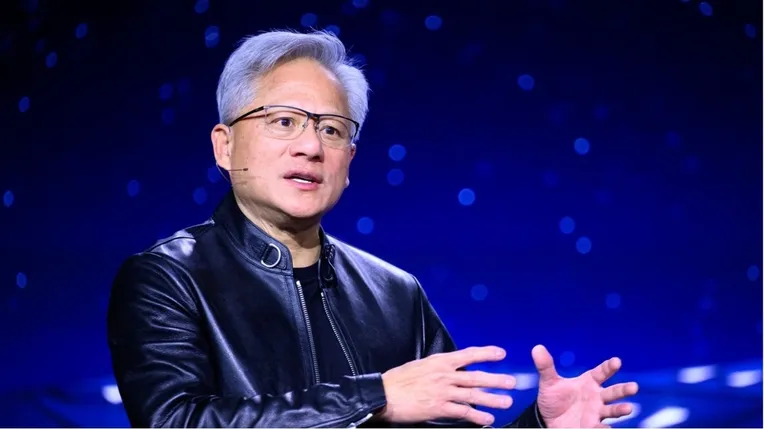
BEIJING — China has denied allegations that it tried to gather intelligence on the chief executive of U.S. company Nvidia, Jensen Huang, through a businesswoman allegedly tied to Beijing. It described the reports in circulation as a campaign to smear its reputation.
The Chinese response followed a New York Times report describing a personal relationship between Huang and a business executive. According to the report, U.S. intelligence agencies believed she was gathering information for China.
Nvidia announced an independent investigation into the matter, amid questions over whether sensitive commercial or technological information may have been put at risk, as competition between Washington and Beijing over AI chips intensifies.
Beijing officially rejects the allegations
Chinese Foreign Ministry spokesperson Guo Jiakun said on Monday that the allegations of a Chinese spying operation are not based on evidence, and called them an attempt to defame his country.
The Chinese government also denied the contents of the New York Times report, which referred to a businesswoman named Alice Huang who allegedly had a close relationship with Nvidia's chief.
In its response, Beijing did not provide further details on the nature of the relationship or the results of any independent investigation. The espionage allegations remain disputed, and no judicial evidence has been announced proving that an intelligence operation took place.
What did Nvidia's chief say?
According to U.S. reports, Jensen Huang admitted to Nvidia's board of directors that he had a personal relationship with a business executive, but he has not publicly disclosed her identity.
The reports said Huang apologized to his family and to the company and expressed willingness to cooperate with the investigation, while stressing the protection of Nvidia's interests and U.S. national security.
The company announced on Sunday that it had begun an independent investigation to examine the published information. It has not issued a final finding on whether there was a leak or any violation involving its trade secrets.
The publicly disclosed personal relationship does not in itself establish that the company's chief was involved in espionage activity, or that he knew of any possible information-gathering activity.
Who is the businesswoman named?
The name Alice Huang has been circulated and linked to a company active in supplying advanced technologies. She has faced allegations of smuggling U.S. chips into the Chinese market.
News coverage also referred to Megaspeed International, a company whose name has been associated with the advanced processor sector.
However, the allegations against the woman and the company remain published claims, and the available information does not allow a firm conclusion that espionage or smuggling took place, as there is no final court ruling.
George Chen, of the consulting firm The Asia Group, said the two most important questions are whether Huang was aware of any intelligence activity, and whether confidential or strategic information was exposed.
The AI chip rivalry heightens the case's sensitivity
The crisis comes as the United States tries to restrict China's access to advanced processors that can be used to develop AI models and supercomputing applications.
In past years, Huang has called for easing restrictions on Nvidia's sales to China, and he obtained approval from the administration of President Donald Trump to sell H200 chips.
Although these processors are not the company's most advanced, they remain highly capable, and it is still uncertain whether their purchase will be allowed on a large scale inside China.
Huang has also previously supported allowing exports of H20 chips, which were designed for the Chinese market in line with U.S. restrictions.
Markets await the investigation's results
Nvidia shares fell about five per cent in premarket trading in the U.S. on Monday, as the case spread.
Chinese media covered the case as part of the political tension between the two countries, while official media repeated Beijing's denial of the allegations.
The results of the independent investigation remain decisive in determining whether there was an actual violation or exposure of sensitive information, apart from speculation about the personal relationship.
More World


Latest from Hala Canada
- Canada gives provinces 139 days to nominate tens of thousands of workers for permanent residence
- Newfoundland and Labrador issues 98 new immigration invitations in Nov. 19 round
- Trump administration weighs targeting Iranian leaders to end war, with divisions in Washington over risks
- Report: 82% of Canadian grandparents give financial help to children and grandchildren
- Former London, Ont., councillor Mariam Hamou sentenced to probation in case involving mayor
- Canada to pay $5,000 bonuses to eligible trades workers: eligibility and how to apply